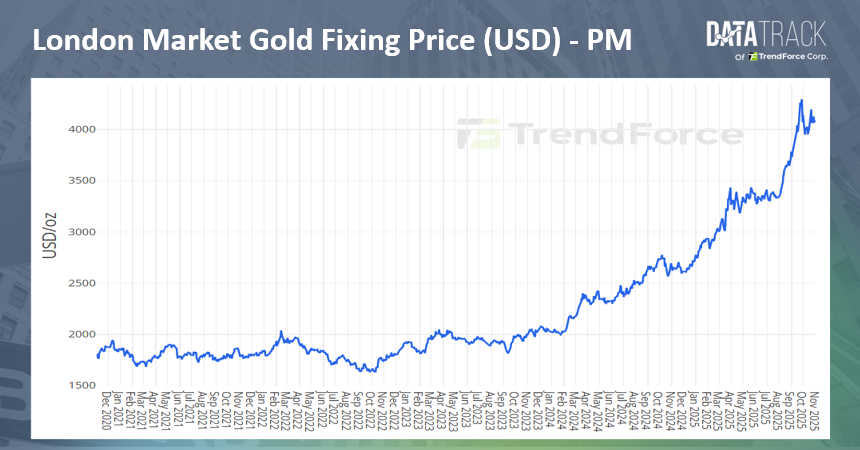
Gold and silver prices have clearly rebounded over the past two months. According to ANZ’s report, as of September 2025, gold has reached around 4,000 USD per ounce, rising more than 10 percent from the beginning of the year. Silver has surpassed 44.7 USD per ounce, hitting a multi-year high. In mid-November, supported by capital inflows and policy expectations, gold and silver strengthened again and remained near multi-year highs. Overall, both metals showed double-digit growth compared with the same period last year, reflecting rising risk-aversion and steady industrial demand.
Recently, gold and silver prices moved higher once more, driven mainly by three factors. First, the expansion of the US fiscal deficit and the possibility of a more accommodative monetary policy from the Federal Reserve have increased market liquidity, enhancing the appeal of precious metals as safe-haven assets. Second, structural demand driven by the energy transition, especially strong silver demand from the solar industry, has further supported silver prices. In addition, rising geopolitical tensions and greater macroeconomic uncertainty have reinforced gold’s role as a store of value, while a weaker US dollar and shifts in the global monetary system have strengthened upward momentum for gold.
In the short term, expectations of policy easing and safe-haven demand will likely keep gold fluctuating around 4,000 USD, while silver has the potential to challenge the 50 USD level. In the medium term, structural demand from new energy and industrial applications will continue to support silver, while gold is expected to benefit from a weaker dollar and central banks’ ongoing accumulation, maintaining a bullish bias. Although policy shifts may create short-term volatility, the fundamentals of the gold and silver markets remain solid, reflecting the long-term value re-rating under global economic and energy-structure changes. Investors may continue monitoring monetary policy and geopolitical risks to capture potential price movements.