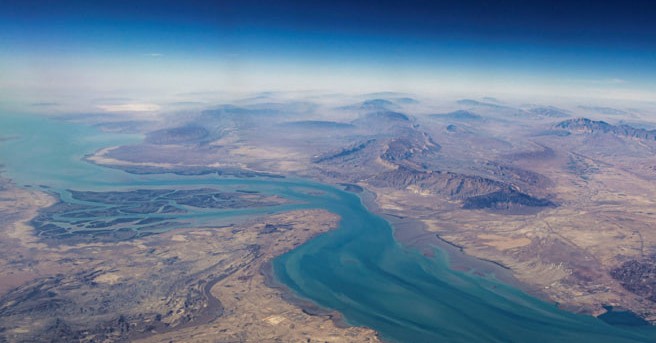
The global economy has been hit by an acute geopolitical energy shock. Since late February 2026, when the United States and Israel launched military strikes against Iran, Tehran's closure of the Strait of Hormuz has severed roughly one-fifth of the world's crude oil and liquefied natural gas supply, stranding more than 200 tankers in the Persian Gulf. Brent crude, which began the year at around $77 a barrel, surged into the $105–$110 range, and the depth of this disruption already dwarfs the energy turbulence triggered by the Russia-Ukraine war in 2022. In its April 14 World Economic Outlook, the IMF was explicit: before this conflict, it had been preparing to upgrade its 2026 global growth forecast to 3.4%. Instead, it has been forced to cut that projection to 3.1%, while raising its global inflation forecast to 4.4%.
What makes this crisis structurally dangerous is the convergence of multiple transmission channels. The Strait of Hormuz is not merely the world's oil artery — it is also the transit route for roughly 30% of internationally traded fertilizers, meaning the disruption has cascaded from energy costs into agricultural inputs and industrial feedstocks. European chemical and steel manufacturers have already begun imposing energy surcharges of up to 30%. For emerging markets, the pain is particularly acute: commodity-importing economies face simultaneous currency depreciation and surging import bills, with already-strained fiscal buffers limiting room for policy relief. Market opinion is sharply divided: optimists point to advancing ceasefire negotiations, arguing that a short-lived conflict would allow energy markets to normalize; pessimists counter that even a ceasefire will not quickly resolve the logistical backlog, noting that clearing hundreds of stranded tankers will take weeks, not days.
Over the next three to six months, oil price dynamics will serve as the key anchor for global inflation expectations. Under the IMF's base case — a contained, short-lived conflict — central banks will face classic stagflationary pressure, unable to rely cleanly on rate hikes when supply-driven inflation is hammering growth. The IMF's severe scenario, where disruption extends into 2027, puts global growth at around 2%, uncomfortably close to the technical threshold for a global recession — a threshold breached only four times since 1980. For investors, the most underappreciated tail risk is not the conflict's direct destruction, but the possibility that persistently elevated energy costs unanchor inflation expectations, forcing central banks to tighten monetary conditions even as growth deteriorates — a policy trap with no clean exit.