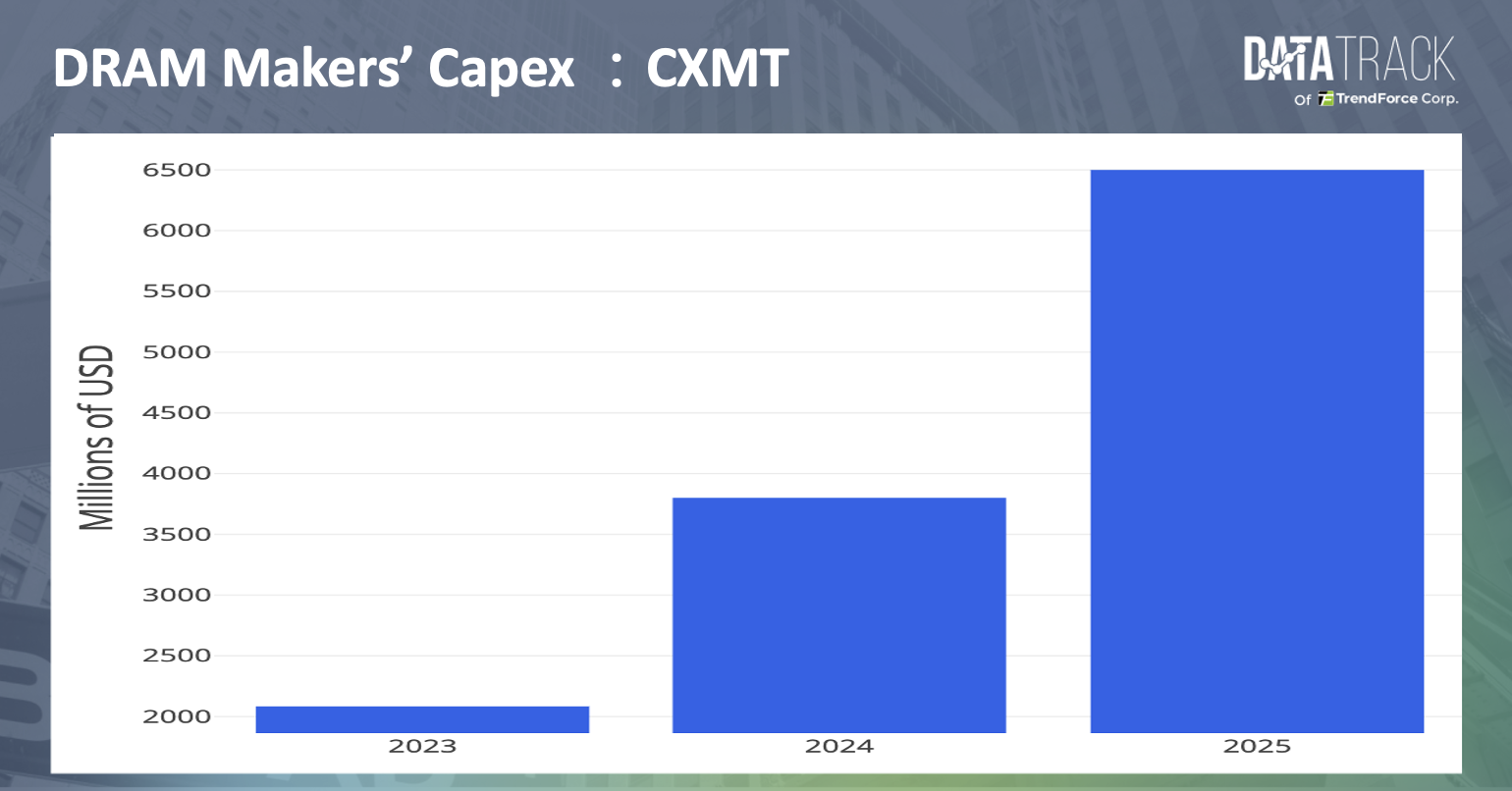
Chinese DRAM manufacturer ChangXin Memory Technologies, or CXMT, officially listed on the Shanghai Stock Exchange’s STAR Market on July 27, 2026. The company’s shares were issued at RMB 8.66 each, opened at RMB 49.50 on the first trading day, reached an intraday high of RMB 55.03, and ultimately closed at RMB 49, up 465.8% from the offering price. Its market capitalization at the close was approximately RMB 3.28 trillion, briefly making it the most valuable listed company in the A-share market.
CXMT recorded full-day trading turnover of RMB 141.187 billion on its first day, becoming the first A-share company to exceed RMB 100 billion in daily turnover. The surge in trading activity temporarily caused system disruptions at some brokerages, reflecting strong market expectations for China’s memory self-sufficiency, AI-related memory demand, and the localization of semiconductor equipment.
However, only approximately 6.73% of CXMT’s total post-offering shares were freely tradable during the initial listing period. The limited free float amplified share-price volatility and the liquidity premium. More important than the first-day price increase is the industrial significance of the IPO. After gaining access to large-scale public-market funding, China’s DRAM industry is moving beyond its initial mass-production breakthrough and entering a new stage in which capacity expansion, technology upgrades, and supply-chain localization are advancing simultaneously.
Record RMB 57.9 Billion STAR Market Fundraising Provides CXMT with New Expansion Capital
CXMT raised approximately RMB 57.919 billion through the offering, surpassing Semiconductor Manufacturing International Corporation and setting a new fundraising record for a STAR Market IPO. If the over-allotment option is exercised in full, the total proceeds could rise to approximately RMB 66.607 billion.
| Item |
Listing and Offering Data |
| Listing date |
July 27, 2026 |
| Stock code |
688825 |
| Offering price |
RMB 8.66 |
| Closing price |
RMB 49 |
| First-day closing gain |
465.8% |
| Market capitalization at the close |
Approximately RMB 3.28 trillion |
| Base offering proceeds |
Approximately RMB 57.919 billion |
| Proceeds after full exercise of the over-allotment option |
Approximately RMB 66.607 billion |
| Proportion of freely tradable shares not subject to lock-up restrictions |
Approximately 6.73% |
| First-day trading turnover |
RMB 141.187 billion |
The strategic placement investors included the National Social Security Fund, insurance capital, semiconductor supply-chain companies, the sponsor’s co-investment vehicle, and employee asset-management plans. The shares are subject to lock-up periods of approximately 12 to 36 months. These long-term funds may help stabilize the shareholder structure during the initial listing period, although the gradual release of restricted shares in the future could increase the tradable supply and prompt the market to reassess the company’s valuation.
According to the prospectus, CXMT will use the proceeds for three projects: technical upgrades to mass-production lines for memory wafers, DRAM technology upgrades, and research and development of advanced dynamic random-access memory technologies. The company previously relied primarily on funding from the governments and state-owned capital of Hefei and Anhui, the China Integrated Circuit Industry Investment Fund, and other financial institutions. Following its STAR Market listing, the public capital market will become an important financing channel for the next phase of production-line upgrades and technology development.
CXMT Ranks Fourth Globally in Capacity and Has Become the Core of China’s DRAM Localization Strategy
CXMT was founded in 2016 and is headquartered in Hefei, Anhui Province. It primarily develops, manufactures, and sells dynamic random-access memory, or DRAM. The market generally regards CXMT as the leading company in China’s DRAM industry. According to the company’s prospectus, its production capacity ranks first in China and fourth globally, although it remains behind the three international leaders: Samsung Electronics, SK hynix, and Micron.
DRAM is primarily used to temporarily store data being processed by a processor and is widely used in smartphones, personal computers, servers, automotive electronics, and industrial equipment. As AI models grow in scale and data-processing volumes increase, server demand for both conventional DRAM and high-bandwidth memory is also rising. The global DRAM market has long been dominated by Samsung, SK hynix, and Micron, which possess leading process technologies, large-scale capacity, customer certifications, and extensive manufacturing experience. After establishing large-scale mass-production capabilities, CXMT became an important company in China’s effort to reduce its dependence on memory imports and fill gaps in the domestic semiconductor supply chain.
CXMT and Yangtze Memory Technologies have different product positions. CXMT primarily develops DRAM, while Yangtze Memory focuses on NAND Flash. The two companies respectively address the computing-memory and long-term data-storage markets, together forming the core of China’s memory localization strategy.
Public-Market Capital Takes Over from Policy-Backed Funding as Capacity and Process Upgrades Advance Together
DRAM is one of the most capital-intensive segments of the semiconductor industry. Building a memory wafer fabrication plant requires investment in factory buildings, cleanrooms, lithography, deposition, etching, cleaning, inspection, metrology, and automation equipment. After production begins, manufacturers must still complete process introduction, yield improvement, and customer certification before nominal capacity can be converted into actual shipments. CXMT has continued to expand its 12-inch DRAM wafer capacity. The IPO proceeds will strengthen its ability to advance production-line upgrades, equipment installation, and product development simultaneously, moving China’s DRAM industry from an early mass-production breakthrough into a stage of competition at scale.
CXMT’s recent financial performance also reflects the effects of capacity expansion and a recovery in the DRAM cycle. Revenue increased from RMB 9.087 billion in 2023 to RMB 24.178 billion in 2024 and then rose further to RMB 61.799 billion in 2025. Over the same period, net profit attributable to shareholders of the parent company amounted to a loss of RMB 16.340 billion, a loss of RMB 7.145 billion, and a profit of RMB 1.875 billion, respectively. The company therefore returned to profitability in 2025.
After entering 2026, rising DRAM prices, higher shipment volumes, and an improving product mix further amplified the company’s earnings. CXMT generated approximately RMB 50.8 billion in revenue in the first quarter, representing year-on-year growth of approximately 719%. The company expects first-half revenue of RMB 110 billion to RMB 120 billion and net profit attributable to shareholders of the parent company of approximately RMB 50 billion to RMB 57 billion.
Memory wafer manufacturers have high fixed-cost structures. When selling prices and capacity utilization rates increase, profit growth is generally stronger than revenue growth. If the market becomes oversupplied and product prices decline, high depreciation expenses can also rapidly compress gross margins. CXMT’s current earnings growth therefore reflects both market-share gains and an upswing in the industry cycle. Its long-term competitiveness must still be tested across a complete market cycle.
AI Supports the DRAM Cycle as CXMT’s Expansion Accelerates Equipment Localization
AI demand affects CXMT through two main channels. First, AI servers require more memory, directly increasing global DRAM demand. Second, international manufacturers such as Samsung and SK hynix are allocating more advanced production capacity to higher-margin HBM products, constraining the supply of general-purpose DRAM used in personal computers, smartphones, and conventional servers.
Under these supply-and-demand conditions, CXMT can benefit from higher general-purpose DRAM prices and capacity utilization rates even before securing a major share of the HBM market. However, as CXMT and other manufacturers continue to expand, additional supply could expose the memory market to renewed pricing pressure over the medium to long term.
CXMT’s capacity expansion will also increase demand for deposition, etching, cleaning, metrology, and inspection equipment. As the United States restricts exports of certain advanced semiconductor equipment to China, Chinese wafer manufacturers have a stronger incentive to increase the adoption of domestic equipment. Chinese equipment suppliers such as Naura Technology Group, Advanced Micro-Fabrication Equipment, and ACM Research Shanghai are expected to gain more opportunities to validate their products on mass-production lines.
Semiconductor equipment must demonstrate process stability, defect control, production efficiency, and maintenance capabilities in actual manufacturing environments. If domestic equipment passes certification on CXMT’s production lines, it could subsequently be introduced at other Chinese wafer fabrication plants, increasing the penetration rate of domestically produced equipment. However, international equipment manufacturers still possess technological advantages in lithography, metrology, and certain advanced process stages. Equipment localization will therefore remain a gradual process.
EUV and Advanced Packaging Constraints Remain as High-End HBM Mass Production Awaits Validation
Although CXMT has established large-scale DRAM production capabilities, it still trails Samsung, SK hynix, and Micron in advanced processes, product performance, yields, and certification by high-end customers. One key constraint is access to extreme ultraviolet lithography equipment. International memory manufacturers have gradually introduced EUV into advanced DRAM processes, while Chinese manufacturers affected by export controls must rely on deep ultraviolet lithography combined with multiple patterning and other process adjustments.
DUV multiple patterning can still support process scaling, but the additional exposure, deposition, and etching steps increase manufacturing costs and process complexity and may also affect yields and production efficiency.
Market reports have identified HBM3 and HBM3E as possible future technology directions for CXMT, but the company’s prospectus has not disclosed a clear mass-production timetable. In addition to advanced DRAM processes, HBM requires die stacking, advanced packaging, thermal management, and joint validation with AI-chip customers. Research and development, sample delivery, customer certification, and stable mass production are separate stages. Actual progress must therefore be assessed through product shipments and revenue contributions.
First-Day Premium Valuation Still Requires Fundamental Validation as Market Attention Shifts to Capacity and Yields
Valuation views on CXMT diverged substantially after its listing. Optimistic institutions focus on China’s import substitution, market-share gains, AI-related memory demand, and future HBM potential, and tend to value CXMT as a growth-oriented semiconductor company. More conservative views emphasize that DRAM remains highly cyclical and that the lack of access to EUV equipment may constrain progress in advanced processes.
As trading enthusiasm subsides and restricted shares are gradually released, production capacity, product yields, cash flow, and actual profitability will become more important valuation factors. The first issue to monitor is whether new wafer fabrication plants begin production on schedule and achieve higher yields. The second is the cost competitiveness of DDR5 and advanced processes, followed by whether HBM can pass customer certification and generate stable shipments.
Large-scale fundraising can accelerate fab construction, equipment purchases, and technology development, but process experience, yield management, and customer certification still require time to accumulate. Whether CXMT can further reshape the global DRAM market will ultimately depend on the actual efficiency of its additional capacity, the mass-production progress of advanced products, and the company’s financial resilience during the next downturn in the memory cycle.