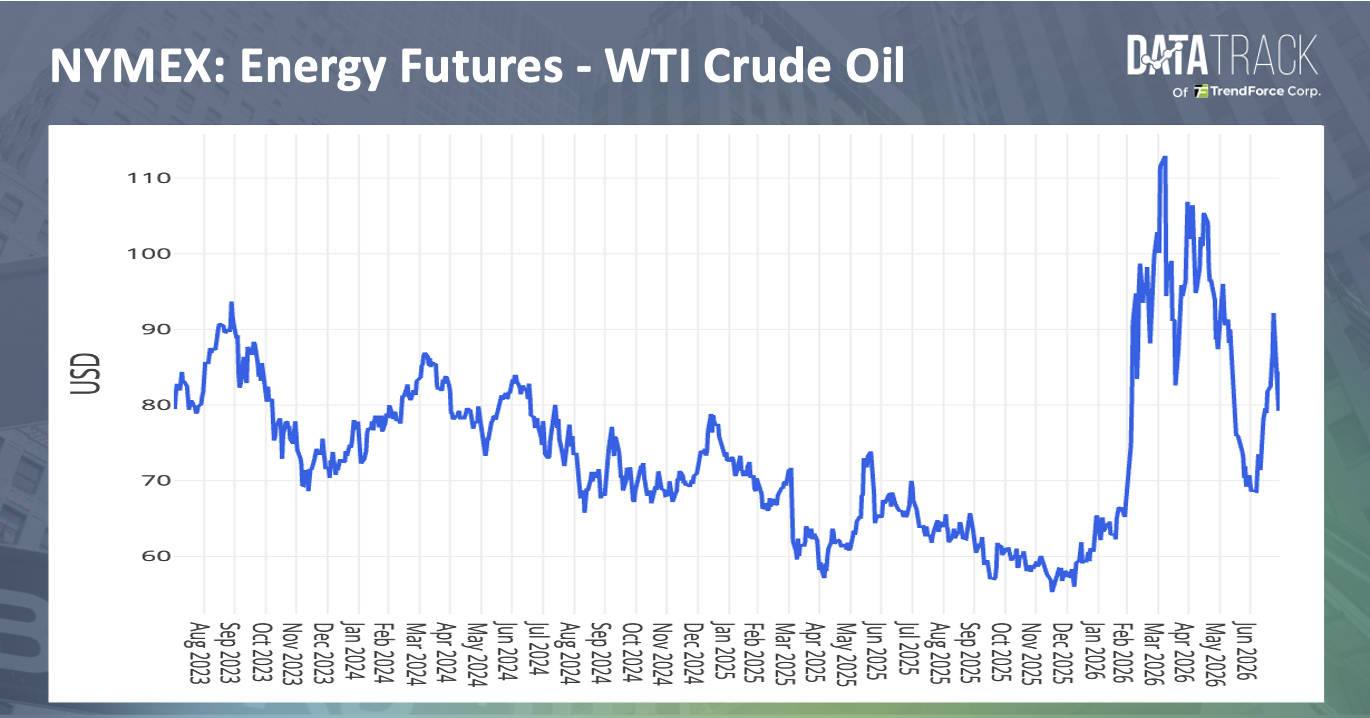
Although Philippine inflation has retreated from its April peak, monetary policy is still far from shifting toward easing. Bangko Sentral ng Pilipinas (BSP) Governor Eli Remolona Jr. said that the Monetary Board could still raise interest rates by 50 basis points at its August 27 meeting, equivalent to a two-notch rate hike, although the probability of such a move remains low. His remarks indicate that the central bank is assessing whether oil prices, minimum-wage increases, U.S. tariffs, and peso depreciation could jointly raise business costs and import prices, causing inflation to spread further into core goods and services.
The BSP faces the challenge of inflation remaining significantly above target while economic growth has slowed rapidly. Should all four pressures worsen simultaneously, the central bank may need to accelerate its rate hikes to stabilize the exchange rate and inflation expectations. However, should energy prices and the peso gradually stabilize, current policy signals and market reactions suggest that the BSP would be more likely to raise rates by 25 basis points or pause for further observation.
The Philippines’ Tightening Cycle Is Not Over After Two Consecutive Rate Hikes
After conflict in the Middle East drove global energy prices higher, Philippine inflation increased from 2.4% in February to 4.1% in March before surging to 7.2% in April. The BSP therefore raised its policy rate by 25 basis points to 4.5% on April 23, marking its first rate hike since October 2023. It delivered another 25-basis-point increase in June, bringing the policy rate to 4.75%.
The BSP also raised its average inflation forecast for 2026 from 6.3% to 6.4% and its 2027 forecast from 4.3% to 4.5%. Inflation is not expected to fall to 3.1% until 2028. This indicates that the central bank does not expect the current inflationary episode to disappear immediately with short-term fluctuations in oil prices and still needs to prevent rising costs from spreading into corporate pricing, wages, and household inflation expectations.
Headline inflation declined to 6.8% in May and then to 6.4% in June, but it remained above the BSP’s 3% inflation target and the upper bound of its 2%–4% tolerance range. More importantly, core inflation, which excludes volatile food and energy prices, increased from 4.1% in May to 4.4% in June. This indicates that price pressures are spreading from fuel and food into other goods and services.
Oil Prices and the Peso Reinforce Each Other’s Impact on Imported Inflation
The Philippines is highly dependent on imported oil. Rising international oil prices therefore directly increase fuel, transportation, and power-generation costs, while also feeding into food prices through logistics, fertilizer, fishing, and agricultural production. Transportation inflation surged from 9.9% in March to 21.4% in April, while the cost of housing, water, electricity, gas, and other fuels also rose significantly, showing that the energy shock has already entered household living costs.
Higher oil prices also increase Philippine demand for U.S. dollars, placing pressure on the external balance and weighing on the peso. The peso closed at 61.847 per U.S. dollar on July 24, setting a record low. As of 11:30 a.m. on July 30, the peso had recovered to around 61.360 per U.S. dollar in intraday trading. Although it had strengthened from its record low, it remained near historically weak levels.
Peso depreciation raises the local-currency cost of dollar-denominated oil, fertilizer, animal feed, and machinery. Oil prices and exchange rates are therefore not independent risks. Higher oil prices increase import spending, while a weaker peso further magnifies the local-currency cost of the same imported products, creating a reinforcing cycle of imported inflation. Although raising interest rates cannot increase the supply of oil, it can enhance the attractiveness of peso-denominated assets and reduce the risks of disorderly currency depreciation and rising inflation expectations.
Wage Adjustments Increase the Possibility of Cost Pressures Spreading into Service Prices
The National Capital Region raised its minimum wage beginning on July 25. The daily minimum wage for non-agricultural workers initially increased from 695 pesos to 755 pesos and will rise again to 780 pesos in January 2027. The full adjustment amounts to 85 pesos per day, or approximately 12.2%, and affects more than 1.1 million workers.
Higher wages help compensate households for rising living costs, but they also increase operating expenses for labor-intensive sectors such as retail, food services, transportation, and personal services. Companies that cannot absorb these costs through productivity improvements or narrower profit margins may raise their prices. An increase in the minimum wage could also lead to adjustments in other salary brackets, extending the impact beyond workers who are directly paid the minimum wage.
The BSP is reassessing the inflationary impact of the wage adjustment. Should other regions subsequently follow with similar increases, the supply-driven inflation initially caused by energy costs could evolve into second-round effects in which wages and service prices reinforce each other.
U.S. Tariffs Indirectly Affect Domestic Prices Through Exports and the Peso
Beginning on July 24, the United States imposed an additional 12.5% tariff under Section 301 of the Trade Act of 1974 on Philippine goods that were not included on the exemption list. The Philippine Department of Trade and Industry initially estimated that approximately 34.28% of the country’s exports to the United States, worth about US$6.25 billion, could be affected. More than 60% of Philippine exports to the United States may qualify for exemptions, including semiconductors, certain electronic products, automotive and aerospace components, and selected agricultural and mineral products.
The tariff’s primary impact comes indirectly through export revenue, business investment, and foreign-exchange supply. Should exporters be required to lower prices to absorb the tariffs, or should U.S. orders shift to other manufacturing locations, the Philippines’ dollar earnings could decline. This could increase depreciation pressure on the peso and raise the cost of imported goods.
First-Quarter GDP Growth Slows to 2.8%, Limiting the Central Bank’s Scope for Aggressive Rate Hikes
The Philippine economy grew by only 2.8% year on year in the first quarter of 2026. Household consumption increased by 3%, while capital formation contracted by 3.3%. The services sector expanded by 4.5%, whereas industrial output declined by 0.1%. These figures indicate that current inflationary pressures are primarily driven by energy, exchange-rate, and broader cost factors.
A substantial rate hike could help stabilize the peso and inflation expectations, but it would also increase the cost of corporate financing, mortgages, and consumer credit, further weakening investment and consumption. A single 50-basis-point rate hike therefore remains a low-probability scenario.
The BSP may accelerate monetary tightening if oil prices surge again, the peso experiences disorderly depreciation, core inflation continues to rise, or wage costs are passed through more broadly into selling prices. Should energy prices and the exchange rate gradually stabilize, the central bank would be more likely to raise rates by 25 basis points or pause for further observation, balancing the need to curb inflation against the risk of causing a further economic slowdown.
Philippine Policy Is Shifting Toward Preventing Inflation from Becoming Entrenched
Philippine headline inflation has declined from 7.2% in April to 6.4% in June, but core inflation has risen to 4.4%. This indicates that although the initial energy-price shock has eased, price pressures continue to spread into other parts of the economy. Oil prices and the peso are contributing to imported inflation, higher wages are increasing the risk of second-round effects, and U.S. tariffs are creating indirect pressure through export earnings and the exchange rate.
By keeping a 50-basis-point rate hike on the table, the BSP is seeking not only to reduce current inflation but also to prevent widespread corporate price increases, higher wage demands, and inflation expectations from moving away from the target. The future direction of monetary policy will depend on whether the four pressures worsen simultaneously, while weak economic growth means that the threshold for more aggressive central bank action remains relatively high.