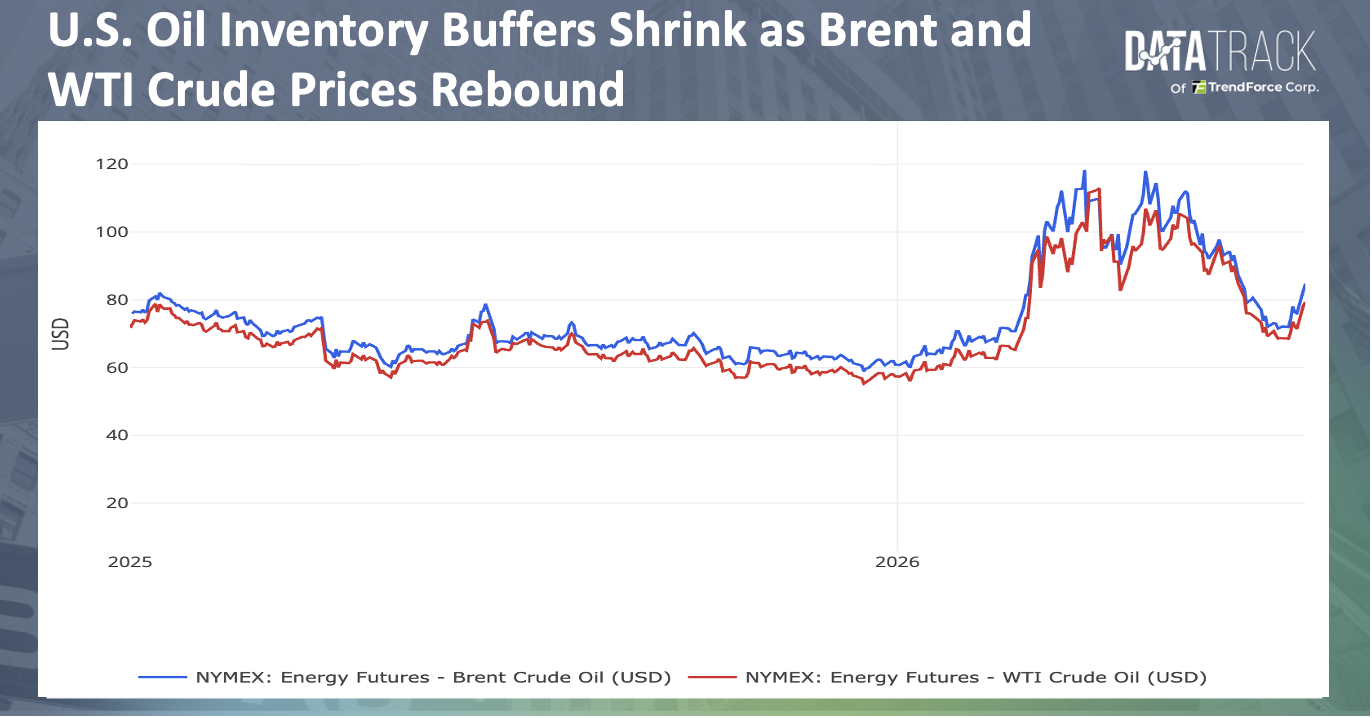
The U.S. Strategic Petroleum Reserve (SPR) has once again fallen to its lowest level in more than 43 years. According to data from the U.S. Department of Energy, SPR inventories decreased by approximately 3 million barrels in the week ending July 10, 2026, falling to 316.5 million barrels, the lowest level since April 1983. Since the U.S.-Iran conflict broke out in late February, the United States has continued releasing emergency crude oil reserves to offset supply shortages in the Middle East and curb fuel prices. As of July 10, SPR inventories had fallen by approximately 98.9 million barrels from the end of February, equivalent to about 57% of the originally planned 172 million-barrel release.
The United States still has substantial crude oil production and commercial inventories, so the decline in the SPR does not mean the country is about to run out of oil. However, strategic reserves, commercial inventories, and inventories at key delivery hubs are all relatively low, indicating that the buffer the United States can immediately deploy in response to the next supply disruption has already diminished.
U.S.-Iran Conflict Forces the United States to Draw Heavily on the SPR Again
The SPR was established after the oil crises of the 1970s and is primarily stored in underground salt caverns along the coasts of Texas and Louisiana, with a statutory storage capacity of approximately 714 million barrels. Its purpose is to provide crude oil rapidly to refineries and the market during wars, natural disasters, or major supply disruptions.
After the U.S.-Iran conflict escalated in late February 2026, shipping through the Strait of Hormuz was disrupted. Before the conflict began, the strait carried approximately 20 million barrels of crude oil and petroleum products per day, making it one of the world’s most important energy shipping routes. Although Saudi Arabia and the United Arab Emirates have some alternative pipeline capacity, it is insufficient to fully offset the supply shortfall caused by disruptions in the strait.
To stabilize the market, 32 member countries of the International Energy Agency agreed in March to jointly release 400 million barrels of emergency oil reserves, the largest coordinated release in the organization’s history. The United States committed to supplying 172 million barrels, making it the main contributor to the coordinated action. If the remaining approximately 73.1 million barrels are delivered in full as planned and no large-scale replenishment occurs during the period, the SPR could fall further to approximately 243 million barrels under a static scenario, equivalent to 34% of its statutory storage capacity. This figure is a scenario estimate based on the existing plan, while actual inventory levels will still depend on delivery schedules, contract adjustments, and the timing of crude oil returns by companies.
U.S. Crude Oil Production Remains High While Total Crude Inventories Continue to Contract
In the week ending July 10, U.S. crude oil production was approximately 13.86 million barrels per day, about 486,000 barrels per day higher than a year earlier and still near a historical high. During the same period, U.S. commercial crude oil inventories fell to 409.7 million barrels, while the SPR declined to 316.5 million barrels, bringing the combined total to approximately 726.2 million barrels. High production has not prevented inventories from falling, mainly because refining and export demand have remained strong. U.S. refineries processed approximately 17.10 million barrels of crude oil per day that week, with utilization reaching 96.2%, while crude oil exports rose to approximately 3.72 million barrels per day. Additional domestic production continued to be absorbed by refinery demand and overseas buying, leaving limited crude oil available to build inventories.
Since late February, U.S. commercial crude oil inventories and the SPR combined have fallen by approximately 129 million barrels. The combined inventory had already dropped to its lowest level since 1984 on July 3, and then declined further from 730.8 million barrels to 726.2 million barrels on July 10, meaning total U.S. crude oil inventories once again reached a new low in more than 40 years. Refined product inventories also remained below seasonal averages. In the week ending July 10, U.S. gasoline inventories fell to 210.5 million barrels, declining by 1.5 million barrels from the previous week and standing approximately 8% below the five-year average for the same period. Distillate inventories increased by 4.6 million barrels during the week to 108.2 million barrels, but remained approximately 11% below the five-year average. This indicates that inventory buffers in the gasoline and diesel markets remain limited and have yet to show a broad-based recovery.
Cushing Inventories Approach a Critical Range, Increasing Short-Term Supply Sensitivity
In addition to the decline in nationwide inventories, crude oil stocks in Cushing, Oklahoma, also remain relatively low. Cushing is the main physical delivery hub for West Texas Intermediate crude oil futures, and changes in its inventories directly affect U.S. crude oil spot supply and demand as well as futures prices. As of July 10, Cushing crude oil inventories stood at approximately 20 million barrels, still hovering near the operational low closely watched by the market. Market analysts have noted that when inventories fall below this level, crude oil quality and withdrawal constraints near the bottom of some storage tanks may increase the operational difficulty of transfers, blending, and futures delivery.
Following the supply disruption in the Middle East, U.S. refineries raised operating rates, while overseas buyers also increased demand for U.S. crude oil. Even with the SPR continuing to supply crude oil to the Gulf Coast market, the releases have remained insufficient to fully offset inventory drawdowns caused by exports and refinery demand.
The SPR Can Still Lower Short-Term Oil Prices, but the Duration of Intervention Has Shortened
The most direct effect of releasing oil from the SPR is to rapidly bring crude oil that does not normally participate in daily trading into the market. When crude oil imports are disrupted, these reserves can help keep refineries operating and reduce the risk of sudden supply contractions in gasoline, diesel, and jet fuel. However, reserve releases mainly alter the timing of crude oil supply and cannot permanently increase global production. When the government uses inventories in advance, fewer barrels remain available for future hurricanes, wars, or export disruptions in other oil-producing countries.
Based on the July 10 level of 316.5 million barrels, the SPR currently stands at approximately 44% of its statutory capacity. This volume is still sufficient to support emergency action on a certain scale, but it is far below the levels commonly seen over the past several decades. If the U.S.-Iran conflict continues, the United States will face greater difficulty balancing short-term price stability with medium- and long-term energy security when considering additional releases.
The effectiveness of SPR policy is also constrained by infrastructure capacity. Crude oil must be withdrawn from underground salt caverns and then transported to refineries through pipelines and ports. Frequent withdrawals increase maintenance pressure on aging equipment, meaning the volume that can be delivered rapidly to the market may not fully correspond to the number of barrels remaining underground.
Repeated Shifts in U.S.-Iran Relations Cause Oil Prices to Reprice Supply Risks
In mid-June, the United States and Iran temporarily reached an interim arrangement, leading the market to expect shipping through the Strait of Hormuz to gradually recover and causing oil prices to fall. However, the two sides resumed fighting in mid-July, disrupting vessel traffic through the strait and triggering a rapid rebound in international oil prices. On July 14, Brent crude oil futures rose to approximately US$84.7 per barrel, while WTI crude oil climbed to approximately US$79.3 per barrel, both reaching their highest levels in nearly one month. The sharp short-term increase in oil prices showed that even though countries had released emergency reserves on a large scale, they still could not fully eliminate the risk premium associated with disruptions in the Strait of Hormuz.
The futures market also shifted into backwardation, with near-term prices exceeding longer-dated prices, indicating that traders were willing to pay more for immediate access to crude oil. The market’s focus therefore shifted from the possibility of future oversupply to whether current physical crude oil supplies were sufficient to meet refining and export demand.
The Exchange Program Will Support Future Replenishment, but Low Inventories Are Unlikely to Recover Quickly
The current U.S. oil release has primarily taken the form of an exchange or loan arrangement. After receiving crude oil from the SPR, energy companies must return the same amount in the future and pay an additional quantity of crude oil as an in-kind premium. The U.S. Department of Energy estimates that the release of 172 million barrels could ultimately result in the return of approximately 200 million barrels, about 20% more than the amount released. If the contracts are fulfilled successfully, the government will be able to rebuild inventories without directly bearing substantial crude oil purchase costs. However, the return schedules differ across exchange contracts, with replenishment expected to begin in November 2026 and continue through 2029. The SPR may therefore remain at a low level in the short term. Future purchases by companies seeking to fulfill their return obligations could also increase demand in the physical market and limit the downside in oil prices.
Low Inventories Will Amplify the Market Response to the Next Supply Shock
The SPR falling to its lowest level since 1983 does not mean that oil prices will inevitably continue rising. If the U.S.-Iran conflict de-escalates, the Strait of Hormuz returns to normal operations, OPEC+ raises production, and global demand slows, commercial inventories could begin accumulating again. The key issue is the oil market’s ability to withstand sudden events after its inventory buffer has declined. When commercial inventories and the SPR are both high, geopolitical shocks can initially be absorbed by inventories. When both fall simultaneously, the market is more likely to reflect potential supply shortages directly in spot prices, futures curves, and fuel costs.
Key indicators to monitor going forward include the remaining pace of SPR releases, commercial crude oil and Cushing inventories, vessel traffic through the Strait of Hormuz, and the actual return schedule for exchanged crude oil. If Middle East supply risks persist while U.S. inventories fail to recover, low SPR levels will gradually weaken the government’s ability to restrain oil prices and energy inflation.