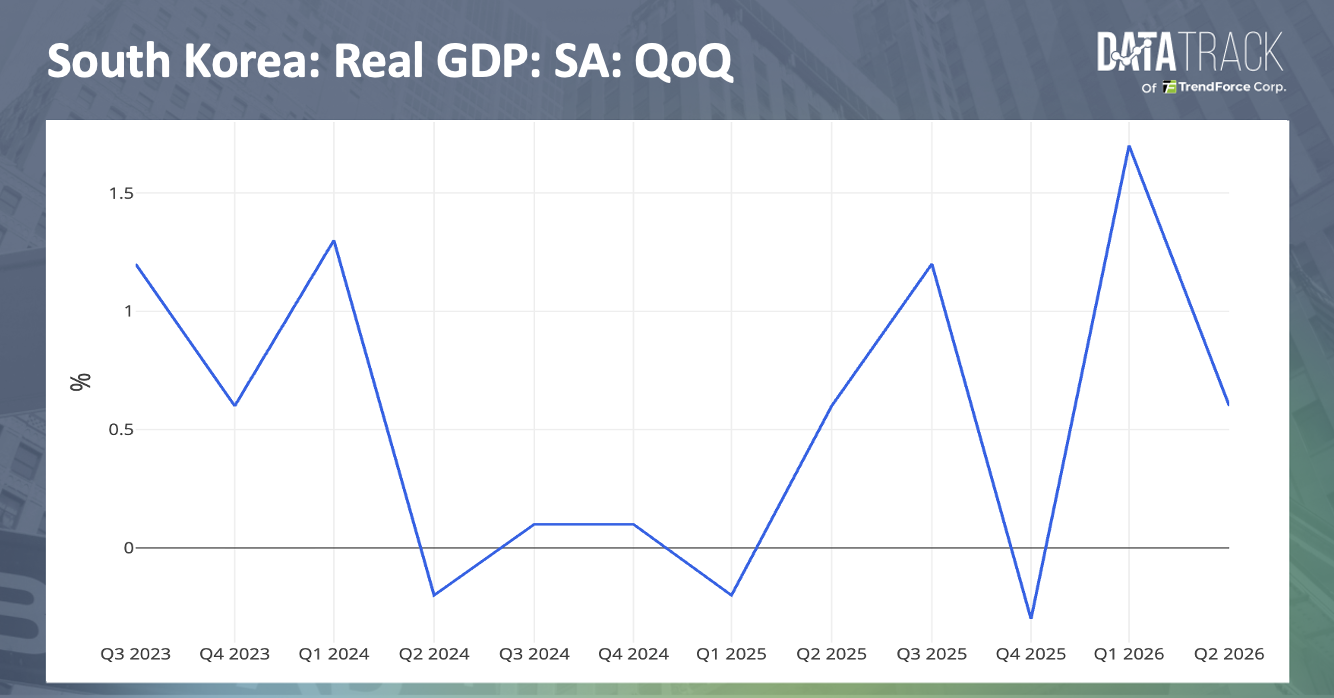
The Bank of Korea raised its benchmark interest rate by 25 basis points on July 16, 2026, from 2.50% to 2.75%, marking its first rate increase since January 2023. All seven members of the Monetary Policy Board unanimously supported the decision. The central bank said that stronger exports and investment had improved economic growth, inflation could remain above the 2% target for some time, and financial stability risks related to housing prices in the Seoul metropolitan area, household debt, and exchange-rate volatility continued to rise. It therefore remained necessary to maintain a policy stance consistent with further rate increases.
The distinctive feature of this policy shift is that the AI chip boom has simultaneously increased South Korea’s capacity to withstand higher interest rates and intensified demand-side inflation and financial imbalances. Rapid growth in semiconductor exports, corporate earnings, and capital expenditure has reduced concerns that higher interest rates will significantly weaken the broader economy. At the same time, rising household lending and housing prices have made it more difficult for the central bank to maintain an accommodative policy environment.
| Indicator |
Latest Data |
Policy Implication |
| Benchmark interest rate |
2.75% |
Raised by 25 basis points on July 16 |
| Real GDP preliminary estimate for 2Q26 |
Up 0.6% QoQ and 3.7% YoY |
Economic expansion remains intact |
| CPI in July 2026 |
Up 2.8% YoY |
Lower than in June but still above target |
| Core CPI in July 2026 |
Up 2.6% YoY |
Domestic price pressures remain persistent |
| Preliminary semiconductor exports in July 2026 |
US$41.01 billion, up approximately 179% YoY |
AI and memory demand support exports |
| Household credit outstanding at the end of 1Q26 |
KRW 1,993.1 trillion |
Debt stock remains close to KRW 2,000 trillion |
| Preliminary current account balance in June 2026 |
US$49.73 billion surplus |
External financial buffers have expanded |
Data are current as of August 6, 2026. GDP, export, and current account figures are preliminary and may be revised.
Policy Reverses After Four Rate Cuts as Economic Growth and Financial Risks Both Support Tightening
The Bank of Korea cut interest rates four times between October 2024 and May 2025, lowering the benchmark rate from 3.50% to 2.50%, before leaving it unchanged for more than a year. The July 2026 rate increase represents a shift in policy priorities from supporting economic activity toward controlling inflation and financial imbalances. The central bank has also not characterized the move as a one-off adjustment.
Central banks generally face a trade-off between containing inflation and sustaining economic growth, but the policy conflict is currently less pronounced in South Korea. Real GDP increased by 0.6% quarter over quarter and 3.7% year over year in the second quarter, while real gross domestic income rose by 3.6% quarter over quarter, indicating that stronger export prices and improved terms of trade are raising domestic income. The central bank believes that the benefits of the semiconductor upcycle are gradually spreading from exports and corporate earnings to investment, income, and consumption, potentially increasing demand-side inflationary pressure.
Chip Exports Strengthen External Accounts but Also Increase Sensitivity to the AI Cycle
Continued global investment in AI infrastructure is supporting South Korean exports of memory and computer products. Exports reached US$98.89 billion in July 2026, up 62.8% year over year. Semiconductor exports totaled US$41.01 billion, increasing by approximately 179% and reaching around 2.8 times their level a year earlier. Computer exports also rose sharply on strong demand for enterprise storage products, while the monthly trade surplus reached US$30.32 billion.
The current account surplus expanded to US$49.73 billion in June, setting a new monthly record. Large export and current account surpluses help reduce external financing needs and provide a buffer for the won and energy import costs, while giving the central bank more room to address domestic inflation and asset-market risks.
However, the concentration of export growth in semiconductors also makes South Korea’s economy more dependent on global AI capital expenditure and memory prices. When chip demand remains strong, corporate income and investment can spread to domestic demand. If data center investment slows, exports, income, and capital expenditure could weaken at the same time.
Headline Inflation Has Eased, but Core Inflation Continues to Support Further Rate Increases
When the central bank decided to raise interest rates, CPI inflation stood at 3.2% year over year in June, while core CPI inflation was 2.5%. Oil and agricultural product prices increased cost pressures, while the earlier weakness of the won also raised import prices. At the same time, the central bank was concerned that stronger income and consumption generated by the semiconductor boom could cause inflation to spread from cost-related factors to domestic demand.
The latest data show that CPI inflation fell to 2.8% year over year in July and declined by 0.2% from the previous month, mainly because of lower petroleum product prices and fuel-price measures. However, core CPI excluding food and energy rose from 2.5% to 2.6%, its highest level since December 2023, indicating that price pressures related to services and domestic demand remain persistent.
The decline in headline inflation over a single month therefore reduces the urgency of consecutive rate increases but is not sufficient to reverse the tightening direction. Minutes released on August 4 showed that some board members believed one rate increase might not be enough to bring inflation back to target and that further preventive action should be considered depending on changes in growth, inflation, and financial risks.
The Household Debt Ratio Has Improved, but Debt Levels and Housing Risks Continue to Rise
South Korea’s household debt-to-GDP ratio fell to 85.3% in the first quarter of 2026, down 2.9 percentage points from the previous quarter, but the improvement mainly reflected rapid growth in nominal GDP. Household credit outstanding still increased by KRW 14 trillion over the same period to KRW 1,993.1 trillion, while household loans rose by KRW 12.9 trillion to KRW 1,865.8 trillion. A lower debt ratio does not mean that households are substantially repaying their principal.
In the second quarter, both housing-related loans and other household loans increased significantly, while housing price growth in Seoul and surrounding areas continued to accelerate. The central bank said that household loans from financial institutions had recently been increasing by around KRW 8 trillion to KRW 9 trillion per month, reflecting continued strength in home-purchase and other borrowing demand.
Household debt therefore creates two-way pressure on monetary policy. Higher interest rates can restrain new borrowing, housing prices, and leveraged investment, but they also increase the interest burden on borrowers with existing mortgages and personal credit loans, reducing household consumption. Although the central bank has reasons to continue tightening, the pace of rate increases must avoid causing a sudden deterioration in debt-servicing burdens.
Further Tightening Remains Likely, but Its Timing Depends on Inflation, Housing, and the Chip Cycle
The Bank of Korea’s next interest-rate meeting will be held on August 27. The decline in headline inflation in July gives the central bank room to wait for more data. However, higher core inflation, faster growth in household lending and housing prices in the Seoul metropolitan area, and the transmission of the semiconductor upcycle into domestic demand all support retaining the option of another consecutive rate increase.
The future policy path can be assessed through four indicators: whether core and services inflation ease, the pace of housing price and household loan growth in the Seoul metropolitan area, international oil prices and the won exchange rate, and whether semiconductor export growth can be sustained. If core inflation, housing prices, lending, or depreciation pressure on the won rises again, the probability of an earlier rate increase will increase. If chip exports and domestic demand weaken significantly, the interval between rate increases may lengthen. The Bank of Korea has stated that it will determine the timing and scale of additional rate increases based on the latest data and will not pre-commit to a fixed policy path.
This rate increase shows that the Bank of Korea is using the period of strong AI chip activity to address inflation, housing prices, and household leverage in advance. The chip boom has given South Korea greater capacity to withstand higher interest rates, but economic growth and income have also become more concentrated in a single industry cycle. The key question ahead is whether semiconductor earnings can translate into broader income and domestic demand growth while preventing capital from continuing to flow excessively into real estate and leveraged investment.